[Event Recap] From Tea Gardens to Digital Resonance: Asia University DMD Students and Faculty Explore Songbailing, Practicing Sustainable Creativity Rooted in Tea Culture
As higher education increasingly responds to the Sustainable Development Goals (SDGs), the Department of Digital Media Design at Asia University has extended its teaching into real rural settings, promoting cross-disciplinary learning centered on local culture and industry. The required first-year course “Introduction to Digital Media,” taught by Assistant Professor Li Xin-zhu (李心主), is combined with the college rural practice co-creation program “Tea Fragrance, Digital Resonance: Youth Rural Practice Program,” using Taiwan’s tea culture as its teaching focus. Through field walks, design thinking, and digital creation, students engage with core goals including SDG 4 (Quality Education), SDG 11 (Sustainable Cities and Communities), and SDG 12 (Responsible Consumption and Production), forging a deep link between design education and sustainable rural development.
The course is built on the framework “from cultural understanding to creative translation.” At the start of the semester on September 14, 2025, students visited the Songbailing tea garden in Nantou for field study. Under the expert guidance of Li Kun-zhou (李坤洲) of Dakun Tea Processing (大昆製茶), students learned about tea plant varieties, plucking methods, and tea-making processes, and came to appreciate the rigor of traditional tea craftsmanship in the details of “one leaf, one heart.” They then tasted teas and made tea-scented sachets, experiencing through taste and smell the flavor differences produced by different tea varieties and roasting methods, and understanding the natural knowledge and everyday wisdom embedded in tea culture. The course also took students to the Songbailing Visitor Center to experience “Tea Aroma Six Senses” (茶薰六覺), transforming tea leaves into facial masks and sensory healing materials and prompting students to consider the many possibilities of agricultural processing and cultural value-added. Chen Zi-ying (陳姿穎), a student, shared that the visit taught her not only professional knowledge of tea-making but also deeply moved her by the spirit of Taiwan’s tea culture: “respect heaven, cherish things, and make with care.”
After the visit, the course returned to campus for experience consolidation and reflection. Through an industry lecture and a design thinking workshop, students re-examined the cultural and industry issues observed in the field and learned to turn problems into creative solutions. Working in small groups, they used design thinking, sticky notes, and scenario models to discuss, building cross-disciplinary collaboration and innovative thinking. Cao Yu-ru (曹鈺娸), a student, said the course, centered on “tea,” covered many dimensions, from nostalgic memories, taste experiences, and beauty applications to tea-making crafts, reshaping her understanding of tea; combined with the field visit, it turned abstract tea knowledge into concrete everyday experiences and cultural imagination. The course also incorporated a tea-fragrance baking activity in which students hand-made matcha pineapple cakes; through kneading, filling, and baking, they experienced how culture can be translated through design into everyday products that can be perceived and shared, deepening their understanding of “cultural innovation” and “responsible production.”
After about two months of course work and creative development, students completed story scripts and project plans. On November 1, 2025, they returned to Songbailing for field interviews and video documentation, using digital media design and marketing expertise to conduct interviews, filming, and recording in groups, and collecting first-hand stories for the local tea industry.
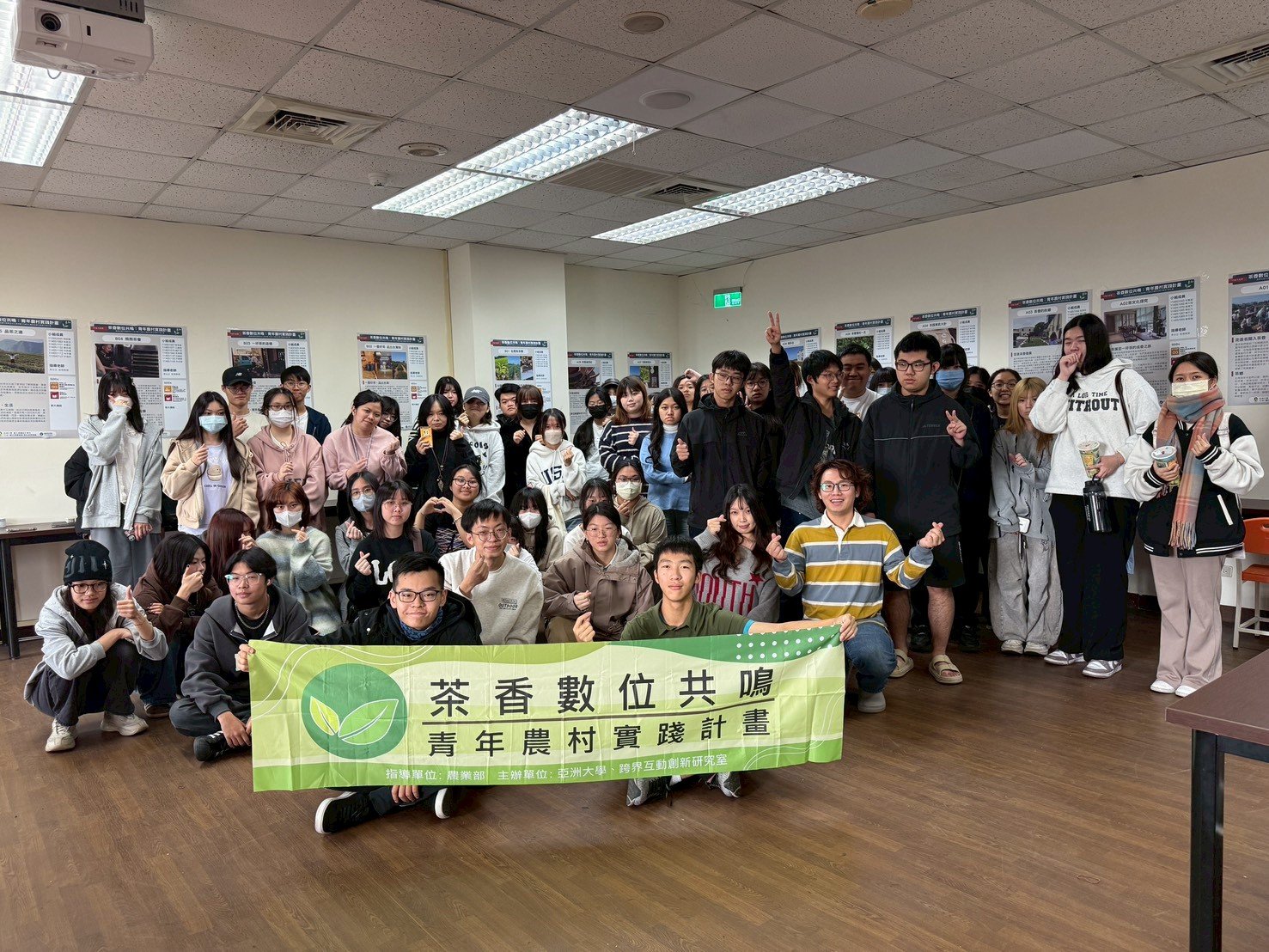
The final exhibition was held on December 26, 2025. Each group completed a video work promoting Songbailing tea culture, covering myths about tea leaves, comparisons between commercial tea drinks and local quality teas, and the historical evolution of Taiwan’s tea culture told through narrative. The diverse creative forms showcase students’ integration of cultural understanding, design thinking, and digital marketing, and concretely respond to how young people use creativity and technology to take part in sustainable rural development. Yu Dong-yan (余東諺), a student, shared: “Our group created an animated story in which the protagonist returns home, discovers treasured tea in his grandfather’s desk, and through drinking tea recalls childhood memories and family bonds, ultimately paying respects to his late grandfather with a cup of tea, conveying the emotional memory and generational connection embedded in tea culture.”
Instructor Li Xin-zhu (李心主) said the course not only deepened students’ understanding of tea culture and sustainability but also, through actual entry into rural settings, took design education from the classroom into society, becoming an important bridge connecting local culture, industry development, and youth innovation.
Asia University has long committed to developing talent with social concern and cross-disciplinary ability. Through hands-on participation in rural practice, students see how design responds to real social needs, connects with local culture, and, through digital media, gives local industries the chance to be seen and understood. This is a concrete example of design education responding to the SDGs and to universities’ social responsibility. Yao Cun-xiong (姚村雄), Dean of the College of Creative Design, said that the Department of Digital Media Design has long promoted a teaching model oriented toward sustainable development, local revitalization, and cross-disciplinary practice. This course, combined with the Ministry of Agriculture’s Rural Practice Co-Creation Program, not only effectively deepens students’ learning and practical abilities but also shows how university expertise can actively contribute to local development, and highlights higher education’s key role in promoting sustainable cities and youth participation.
Course outcomes webpage:
https://sites.google.com/view/xinzhuli/%E8%AA%B2%E7%A8%8B%E6%88%90%E6%9E%9C/%E8%AA%B2%E7%A8%8B%E6%88%90%E6%9E%9C114-1%E6%95%B8%E4%BD%8D%E5%AA%92%E9%AB%94%E6%A6%82%E8%AB%96?authuser=0
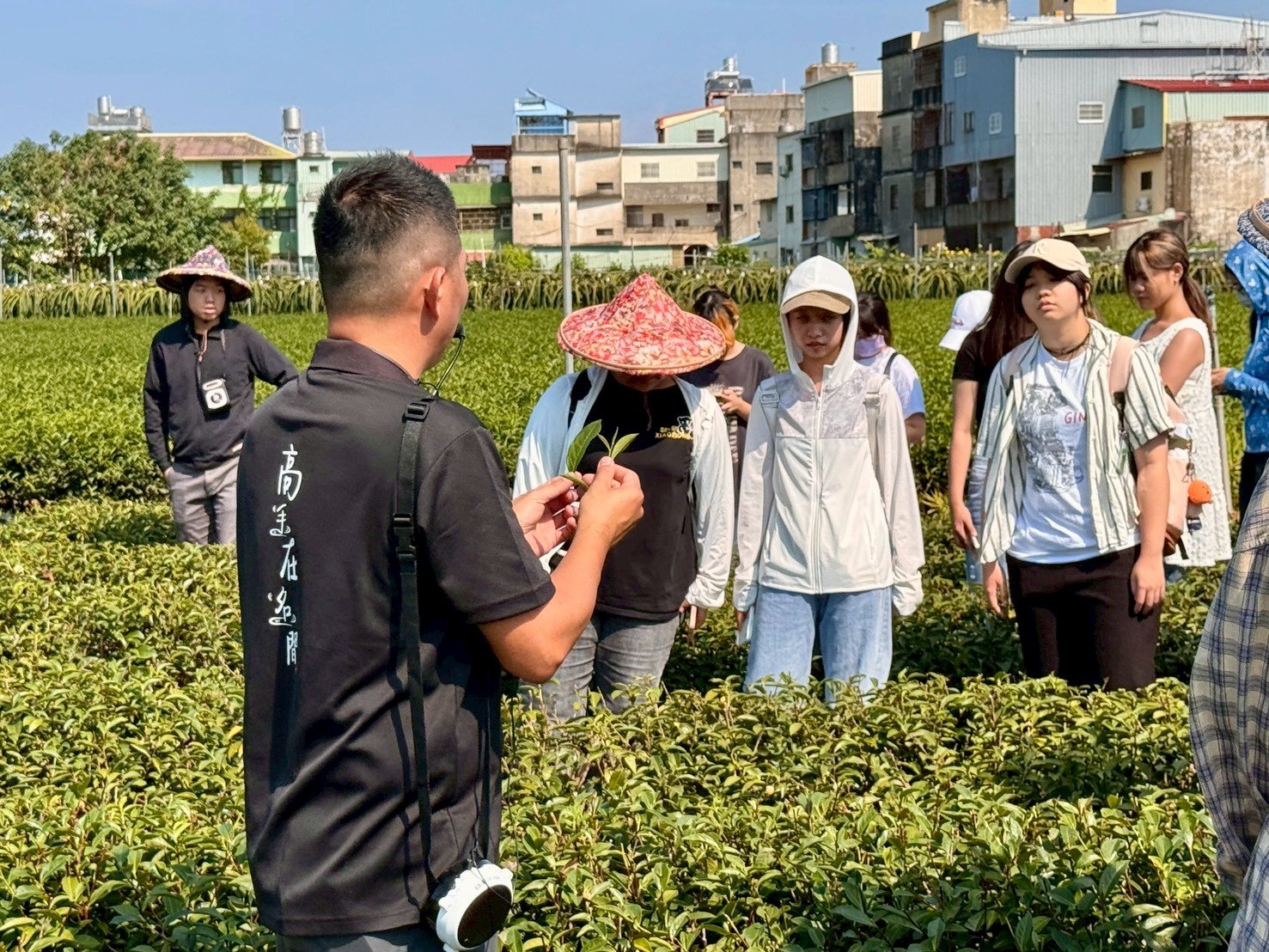
The course is built on the framework “from cultural understanding to creative translation.” At the start of the semester on September 14, 2025, students visited the Songbailing tea garden in Nantou for field study. Under the expert guidance of Li Kun-zhou (李坤洲) of Dakun Tea Processing (大昆製茶), students learned about tea plant varieties, plucking methods, and tea-making processes, and came to appreciate the rigor of traditional tea craftsmanship in the details of “one leaf, one heart.” They then tasted teas and made tea-scented sachets, experiencing through taste and smell the flavor differences produced by different tea varieties and roasting methods, and understanding the natural knowledge and everyday wisdom embedded in tea culture. The course also took students to the Songbailing Visitor Center to experience “Tea Aroma Six Senses” (茶薰六覺), transforming tea leaves into facial masks and sensory healing materials and prompting students to consider the many possibilities of agricultural processing and cultural value-added. Chen Zi-ying (陳姿穎), a student, shared that the visit taught her not only professional knowledge of tea-making but also deeply moved her by the spirit of Taiwan’s tea culture: “respect heaven, cherish things, and make with care.”
After the visit, the course returned to campus for experience consolidation and reflection. Through an industry lecture and a design thinking workshop, students re-examined the cultural and industry issues observed in the field and learned to turn problems into creative solutions. Working in small groups, they used design thinking, sticky notes, and scenario models to discuss, building cross-disciplinary collaboration and innovative thinking. Cao Yu-ru (曹鈺娸), a student, said the course, centered on “tea,” covered many dimensions, from nostalgic memories, taste experiences, and beauty applications to tea-making crafts, reshaping her understanding of tea; combined with the field visit, it turned abstract tea knowledge into concrete everyday experiences and cultural imagination. The course also incorporated a tea-fragrance baking activity in which students hand-made matcha pineapple cakes; through kneading, filling, and baking, they experienced how culture can be translated through design into everyday products that can be perceived and shared, deepening their understanding of “cultural innovation” and “responsible production.”
After about two months of course work and creative development, students completed story scripts and project plans. On November 1, 2025, they returned to Songbailing for field interviews and video documentation, using digital media design and marketing expertise to conduct interviews, filming, and recording in groups, and collecting first-hand stories for the local tea industry.
The final exhibition was held on December 26, 2025. Each group completed a video work promoting Songbailing tea culture, covering myths about tea leaves, comparisons between commercial tea drinks and local quality teas, and the historical evolution of Taiwan’s tea culture told through narrative. The diverse creative forms showcase students’ integration of cultural understanding, design thinking, and digital marketing, and concretely respond to how young people use creativity and technology to take part in sustainable rural development. Yu Dong-yan (余東諺), a student, shared: “Our group created an animated story in which the protagonist returns home, discovers treasured tea in his grandfather’s desk, and through drinking tea recalls childhood memories and family bonds, ultimately paying respects to his late grandfather with a cup of tea, conveying the emotional memory and generational connection embedded in tea culture.”
Instructor Li Xin-zhu (李心主) said the course not only deepened students’ understanding of tea culture and sustainability but also, through actual entry into rural settings, took design education from the classroom into society, becoming an important bridge connecting local culture, industry development, and youth innovation.
Asia University has long committed to developing talent with social concern and cross-disciplinary ability. Through hands-on participation in rural practice, students see how design responds to real social needs, connects with local culture, and, through digital media, gives local industries the chance to be seen and understood. This is a concrete example of design education responding to the SDGs and to universities’ social responsibility. Yao Cun-xiong (姚村雄), Dean of the College of Creative Design, said that the Department of Digital Media Design has long promoted a teaching model oriented toward sustainable development, local revitalization, and cross-disciplinary practice. This course, combined with the Ministry of Agriculture’s Rural Practice Co-Creation Program, not only effectively deepens students’ learning and practical abilities but also shows how university expertise can actively contribute to local development, and highlights higher education’s key role in promoting sustainable cities and youth participation.
Course outcomes webpage:
https://sites.google.com/view/xinzhuli/%E8%AA%B2%E7%A8%8B%E6%88%90%E6%9E%9C/%E8%AA%B2%E7%A8%8B%E6%88%90%E6%9E%9C114-1%E6%95%B8%E4%BD%8D%E5%AA%92%E9%AB%94%E6%A6%82%E8%AB%96?authuser=0