
[Award Announcement] Asia University DMD Uses Toys to Advance Sustainability Education: Introduction to Design Course Combines the SDGs with a Field Trip to a Toy Logistics Center
To help first-year students build a design value system oriented toward sustainability and social responsibility early on, the required course “Introduction to Design,” taught by Li Xin-zhu (李心主) in the Department of Digital Media Design at Asia University, is organized around the United Nations Sustainable Development Goals (SDGs). Through theory, design thinking workshops, exhibitions, and off-campus visits, the course leads students to start from “toys,” a medium close to everyday life, to consider how design can respond to global issues of environment, society, and resource sustainability, and to put the idea that “design changes the world” into practice.
On November 12, 2025, the course held the “Sustainability Starts with Toys: Design Thinking Workshop,” inviting industry mentor Assistant Professor Cheng Dong-yi (程東奕) to co-teach. Starting from the development trends of today’s toy industry, the workshop helped first-year students understand the cultural meaning and industry context of toy design from a more open perspective. Under the theme “Origins of Toys and Pop Culture,” the course explained how artists and brands use visual vocabulary, narrative settings, and material choices to shape distinctive styles and emotional value, guiding students to understand the dual nature of art toys as both cultural expression and commercial potential. In practice, students worked in groups to observe and analyze toy characters, systematically organizing proportions, color schemes, and character emotions. Using a four-quadrant “design positioning map,” they learned to match style characteristics with product positioning and make judgments. Throughout the process, designer Mei Jun-jie (梅君婕) provided professional feedback, helping students deepen the logic of their creative ideation and the precision of their design decisions, so that design thinking would not stop at intuition but take root in concrete analysis.
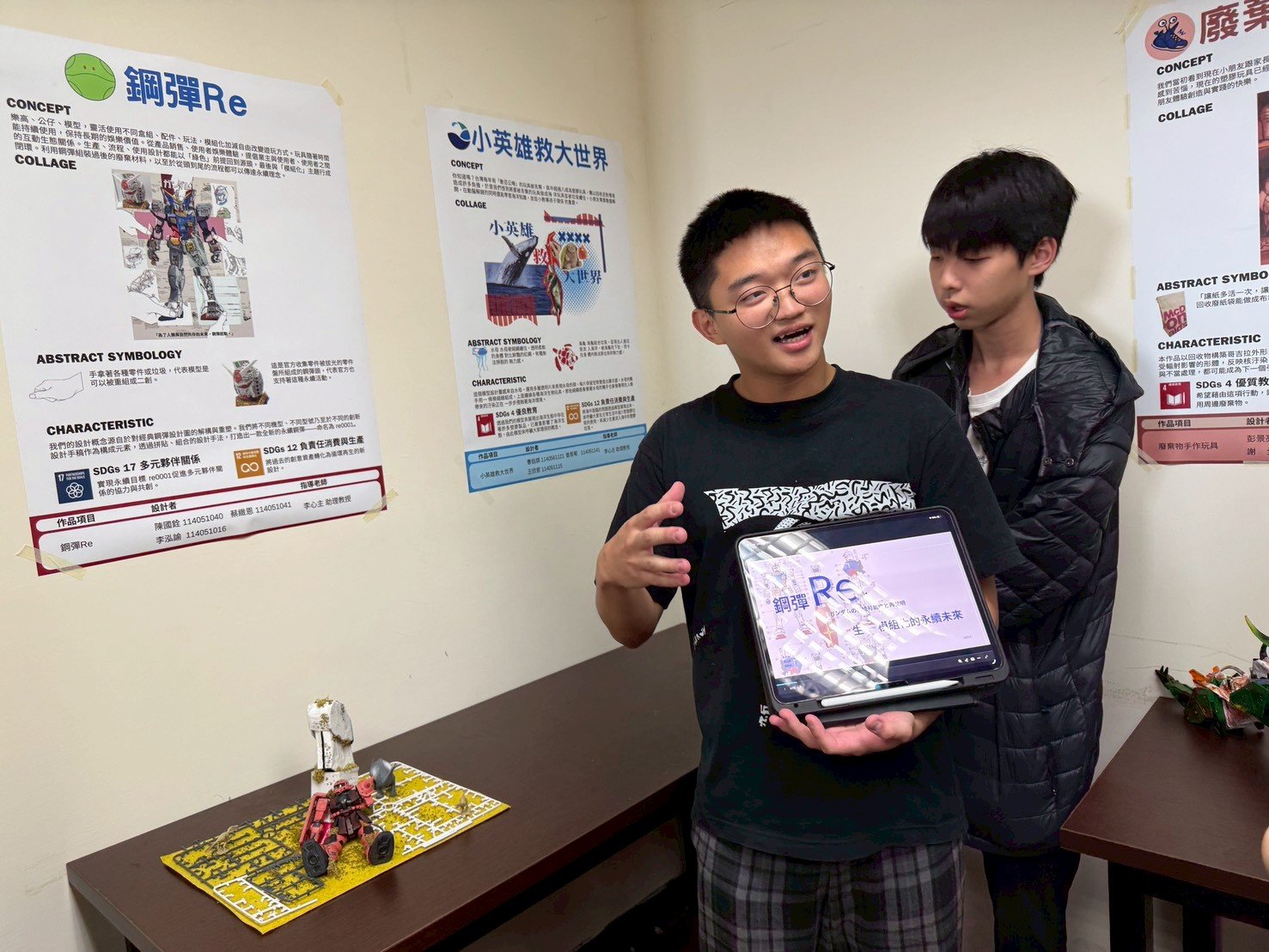
The course then took students further, turning sustainable ideas into action by creating works from discarded toys and materials. One student, starting from leftover scrap from assembling Gundam model kits, developed an art installation that reuses model waste, responding to the environmental problem that model materials are hard to recycle. Another student designed a sharing web platform to facilitate doll exchange and re-circulation, extending the service life of toys. Yet another team combined discarded fabrics and old toys to remake new dolls with individual character and varied textures. Notably, four of the groups took their course outcomes further into the campus sustainability competition and achieved outstanding results, demonstrating the concrete effectiveness of the course in fostering creative practice and sustainability literacy.
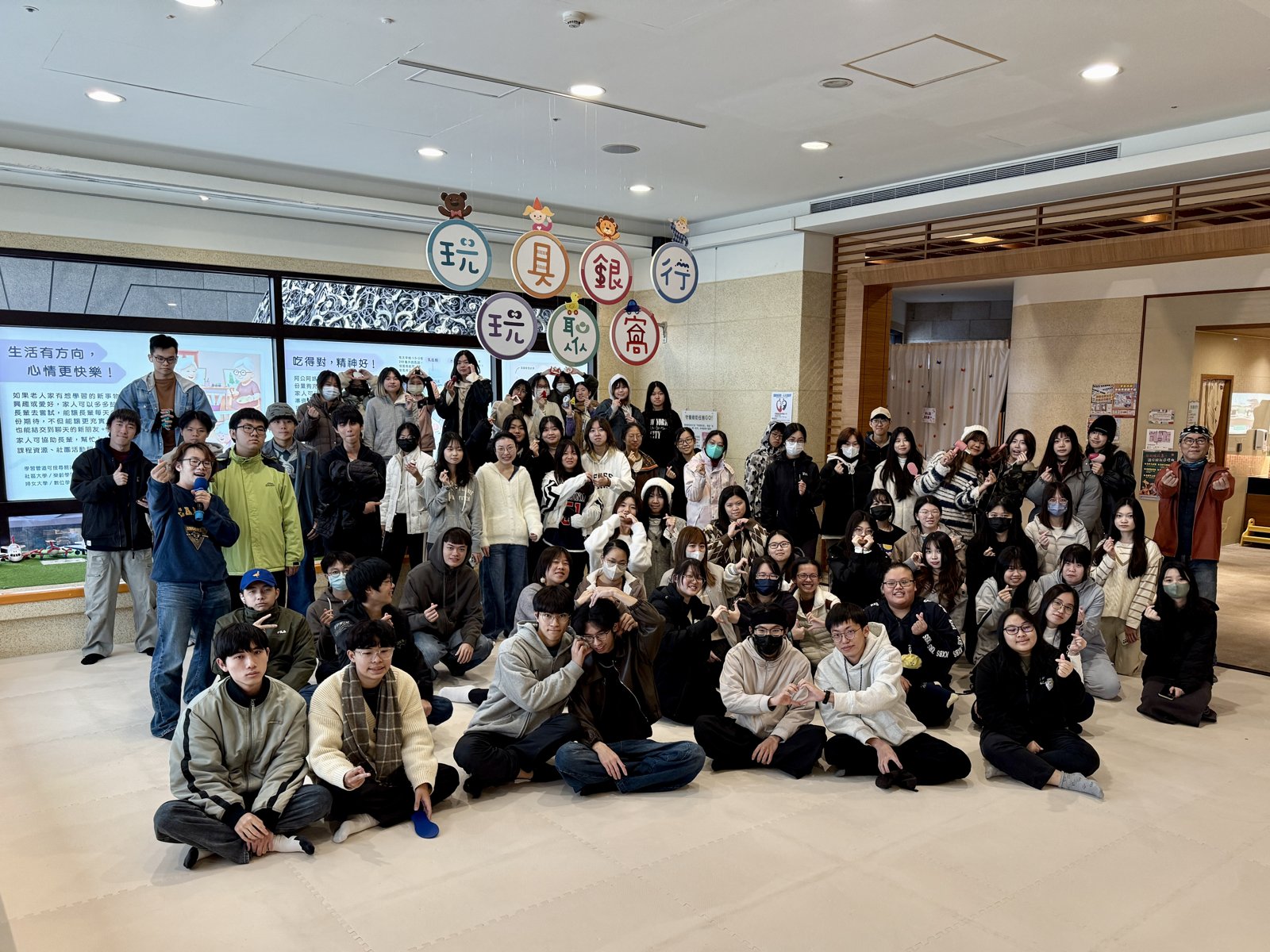
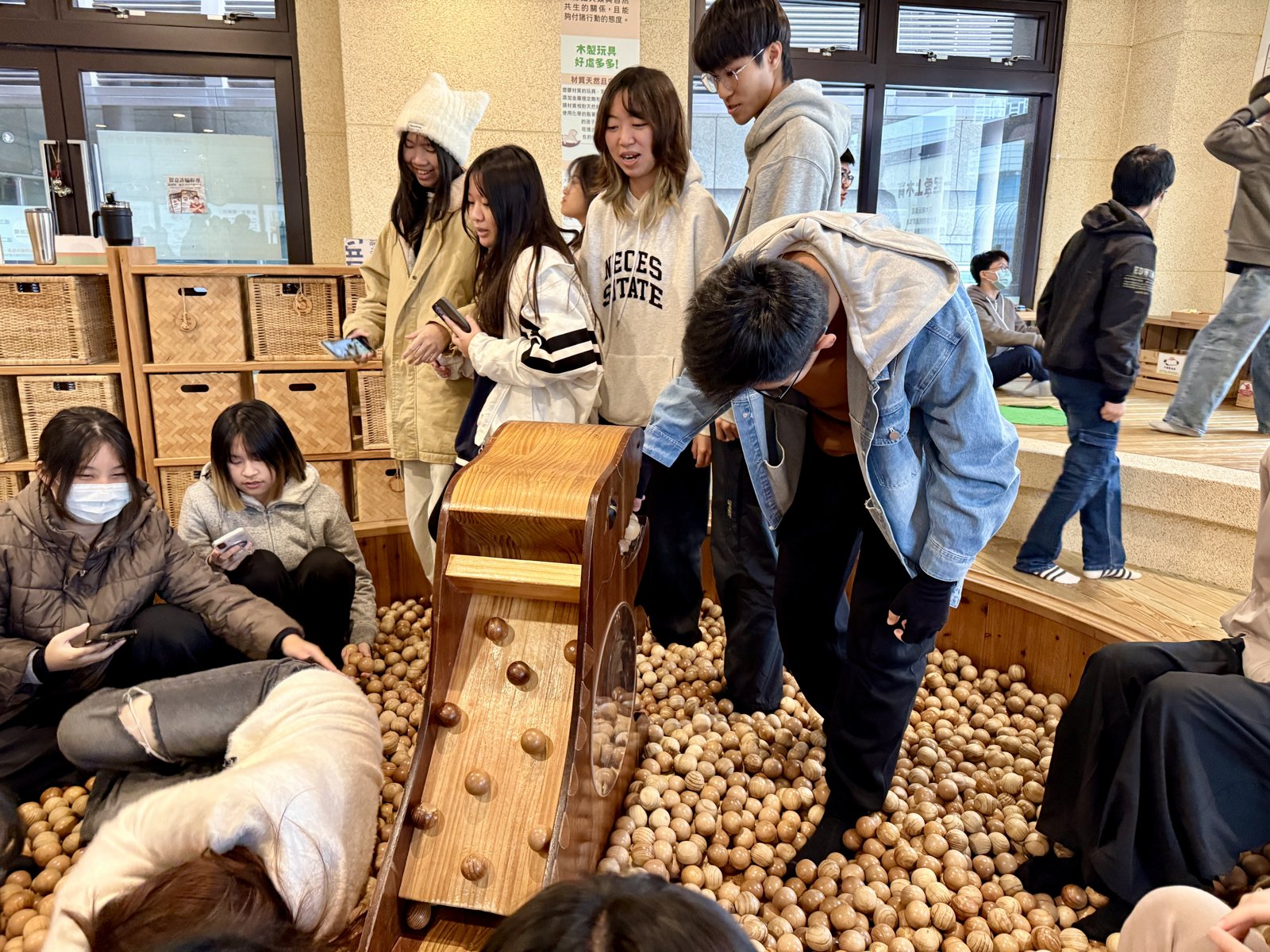
To deepen students’ understanding of how sustainable systems work, on January 8, 2026, Li Xin-zhu (李心主) and Tu Guo-xiong (涂國雄) led students on an off-campus visit to the “Wan Ju Wo” (玩聚窩) toy-sharing space and the Toy Bank logistics center. Through field visits, students learned how a toy-sharing space combines education, experience, and social service to bring sustainability into daily life. At the Toy Bank logistics center, students saw the complete process by which second-hand or discarded toys are collected, sorted, cleaned, repaired, and redistributed, witnessing firsthand how toys can be transformed from discarded objects into reusable social resources, and strengthening their understanding of the circular economy and social design.
Yao Cun-xiong (姚村雄), Chair of the Department of Digital Media Design, said that the arrangement of this course and visit aims to help students understand sustainability issues early, build the right design values through field observation, and recognize that design is not only the pursuit of form and aesthetics but must also respond to real environmental and social needs, laying a solid foundation for future learning and creation.
Participating student Cao Yu-ru (曹鈺娸) of the Digital Media Design Department also shared: “I am very glad to have taken Professor Li Xin-zhu’s course. Through expert instruction and field visits, I rethought the relationship between toys and design from a sustainability perspective for the first time, sparking many creative inspirations and making me more certain that design can bring positive change to society.”
Through the integrated teaching of the “Introduction to Design” course, students not only learn design methods but also, through practice and visits, understand the practical meaning of the SDGs, showing the deeper value of design education combined with sustainable action.
Course outcomes webpage:
https://sites.google.com/view/xinzhuli/%E8%AA%B2%E7%A8%8B%E6%88%90%E6%9E%9C/%E8%AA%B2%E7%A8%8B%E6%88%90%E6%9E%9C114-1%E8%A8%AD%E8%A8%88%E6%A6%82%E8%AB%96?authuser=0
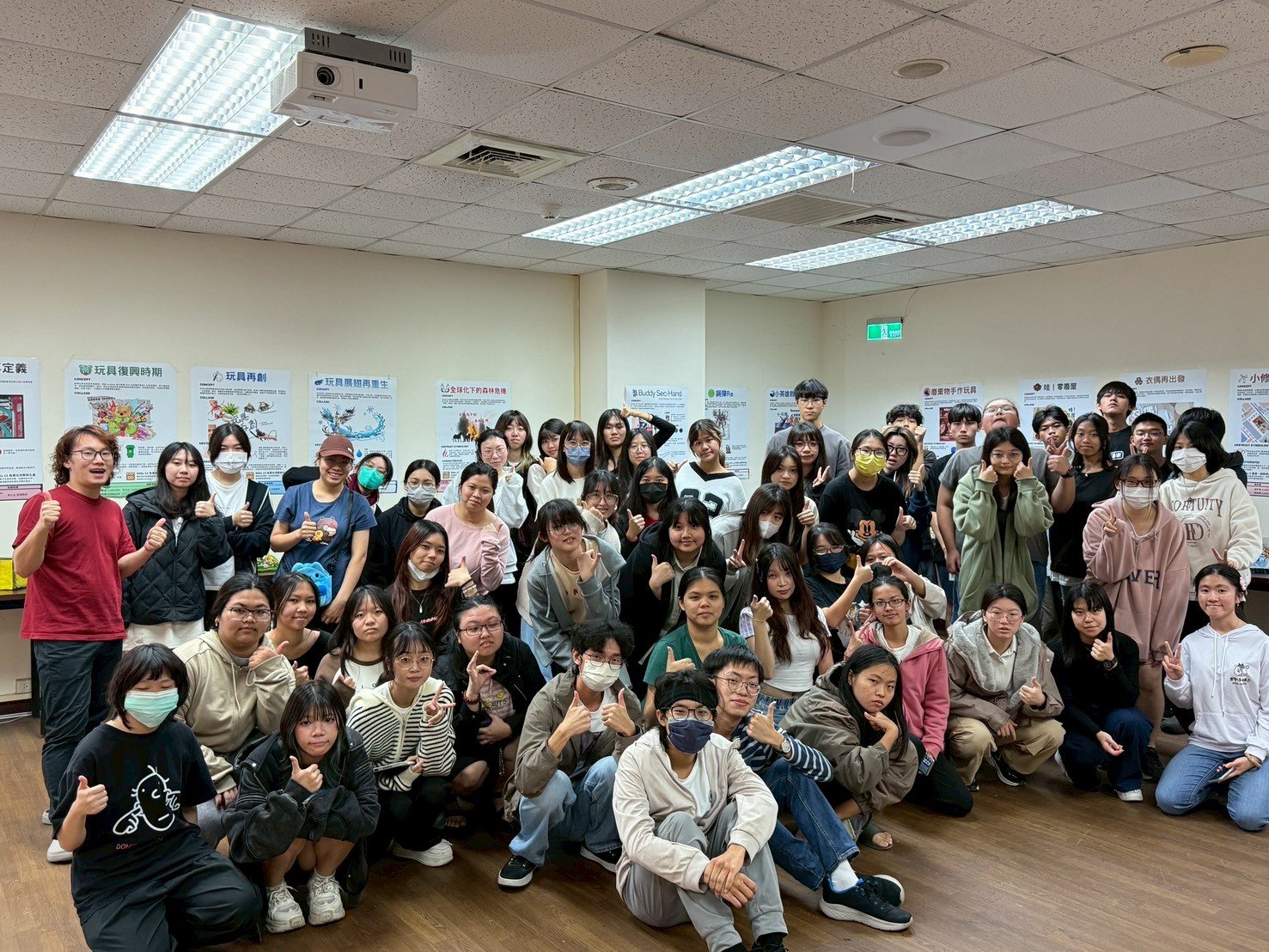
On November 12, 2025, the course held the “Sustainability Starts with Toys: Design Thinking Workshop,” inviting industry mentor Assistant Professor Cheng Dong-yi (程東奕) to co-teach. Starting from the development trends of today’s toy industry, the workshop helped first-year students understand the cultural meaning and industry context of toy design from a more open perspective. Under the theme “Origins of Toys and Pop Culture,” the course explained how artists and brands use visual vocabulary, narrative settings, and material choices to shape distinctive styles and emotional value, guiding students to understand the dual nature of art toys as both cultural expression and commercial potential. In practice, students worked in groups to observe and analyze toy characters, systematically organizing proportions, color schemes, and character emotions. Using a four-quadrant “design positioning map,” they learned to match style characteristics with product positioning and make judgments. Throughout the process, designer Mei Jun-jie (梅君婕) provided professional feedback, helping students deepen the logic of their creative ideation and the precision of their design decisions, so that design thinking would not stop at intuition but take root in concrete analysis.
The course then took students further, turning sustainable ideas into action by creating works from discarded toys and materials. One student, starting from leftover scrap from assembling Gundam model kits, developed an art installation that reuses model waste, responding to the environmental problem that model materials are hard to recycle. Another student designed a sharing web platform to facilitate doll exchange and re-circulation, extending the service life of toys. Yet another team combined discarded fabrics and old toys to remake new dolls with individual character and varied textures. Notably, four of the groups took their course outcomes further into the campus sustainability competition and achieved outstanding results, demonstrating the concrete effectiveness of the course in fostering creative practice and sustainability literacy.
To deepen students’ understanding of how sustainable systems work, on January 8, 2026, Li Xin-zhu (李心主) and Tu Guo-xiong (涂國雄) led students on an off-campus visit to the “Wan Ju Wo” (玩聚窩) toy-sharing space and the Toy Bank logistics center. Through field visits, students learned how a toy-sharing space combines education, experience, and social service to bring sustainability into daily life. At the Toy Bank logistics center, students saw the complete process by which second-hand or discarded toys are collected, sorted, cleaned, repaired, and redistributed, witnessing firsthand how toys can be transformed from discarded objects into reusable social resources, and strengthening their understanding of the circular economy and social design.
Yao Cun-xiong (姚村雄), Chair of the Department of Digital Media Design, said that the arrangement of this course and visit aims to help students understand sustainability issues early, build the right design values through field observation, and recognize that design is not only the pursuit of form and aesthetics but must also respond to real environmental and social needs, laying a solid foundation for future learning and creation.
Participating student Cao Yu-ru (曹鈺娸) of the Digital Media Design Department also shared: “I am very glad to have taken Professor Li Xin-zhu’s course. Through expert instruction and field visits, I rethought the relationship between toys and design from a sustainability perspective for the first time, sparking many creative inspirations and making me more certain that design can bring positive change to society.”
Through the integrated teaching of the “Introduction to Design” course, students not only learn design methods but also, through practice and visits, understand the practical meaning of the SDGs, showing the deeper value of design education combined with sustainable action.
Course outcomes webpage:
https://sites.google.com/view/xinzhuli/%E8%AA%B2%E7%A8%8B%E6%88%90%E6%9E%9C/%E8%AA%B2%E7%A8%8B%E6%88%90%E6%9E%9C114-1%E8%A8%AD%E8%A8%88%E6%A6%82%E8%AB%96?authuser=0